A garage floor takes a beating.
It sees vehicle traffic, road salt, moisture, dirt, dropped tools, hot tires, and daily wear that most interior floors never face. Over time, plain concrete starts to show it. You may notice staining, dusting, hairline cracks, surface wear, or a dull, unfinished look that makes the whole garage feel neglected.
That is why so many homeowners start looking into epoxy floor coating for garage spaces.
A coated garage floor can change the way the space looks, feels, and performs. It can make cleaning easier, help protect the concrete below, and give the garage a cleaner, more finished appearance. For many homeowners, it is one of the most practical upgrades they can make.
Hi-Tech Painting & Decorating offers floor coating services as part of its wider painting and finishing work. The company is based in Sheboygan, has been operating since 1989, and serves Sheboygan County and nearby areas, including Elkhart Lake, Fond du Lac, and Ozaukee County. Its floor coating services also reflect the importance of proper preparation and durable finishing systems for garage floors.
This guide walks homeowners through what they should know before choosing an epoxy floor coating for garage use, including benefits, preparation, installation, lifespan, maintenance, and how to determine whether your floor is a good candidate.
What is epoxy floor coating for garage floors?
Epoxy floor coating is a resin-based system that is applied over prepared concrete to create a tougher, more attractive surface.
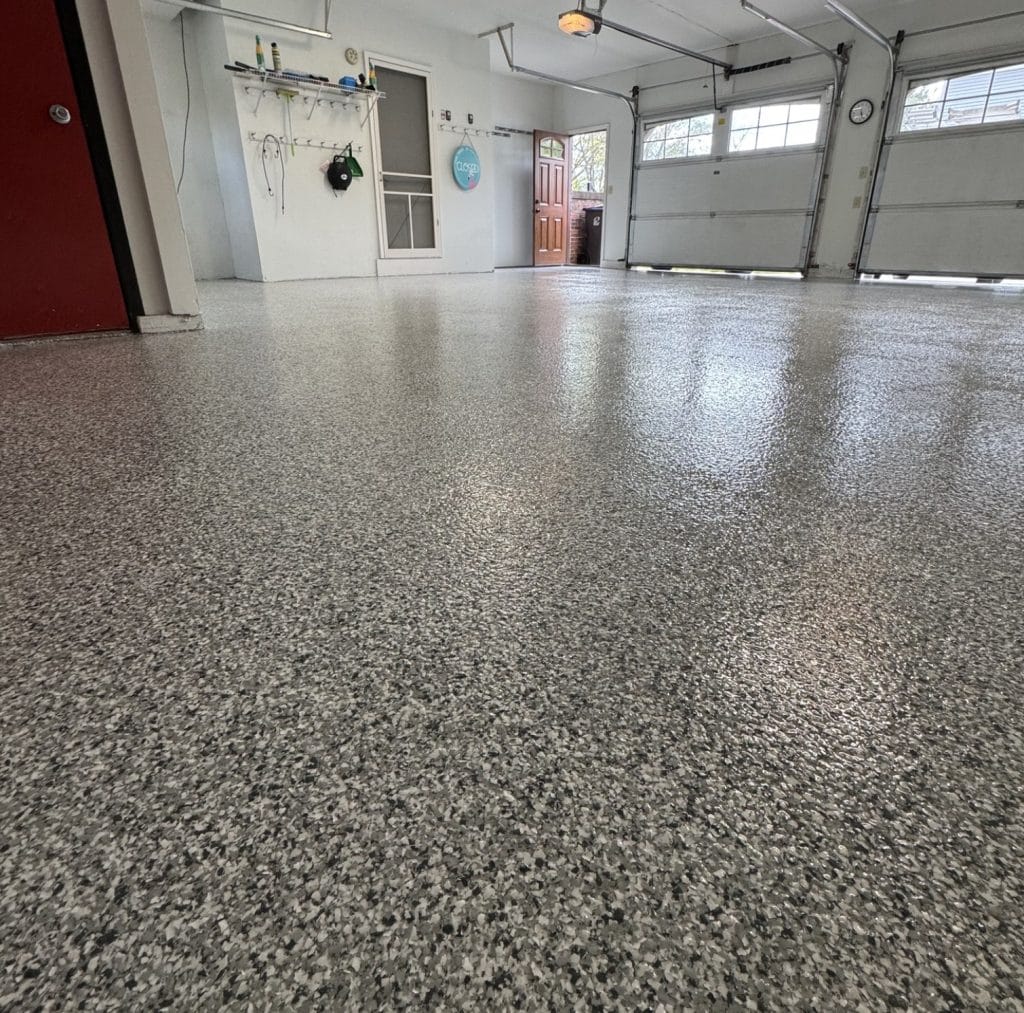
In simple terms, it is not just paint. It is a coating system designed to bond to concrete and create a surface more resistant to wear than bare concrete. Depending on the system used, the finished floor can look glossy, satin, solid color, decorative flake, or more industrial.
When homeowners search for epoxy floor coating for garage projects, they often use “epoxy” as a broad term for durable garage floor finishes. In practice, contractors may recommend different systems depending on the garage condition, the desired look, and the level of performance needed.
That detail matters because the best garage floor solution is not always about choosing a name. It is about choosing a system that fits the space.
Why homeowners choose epoxy floor coating for garage spaces
The biggest reason is simple: garages are hard on concrete.
Bare concrete absorbs moisture, shows tire marks, collects dust, and stains easily from oil, dirt, and household chemicals. Once the floor starts to look worn, the entire garage can feel rough and unfinished, even when the rest of the home is in good shape.
A quality epoxy floor coating for garage use can help with:
A cleaner appearance.
A coated surface looks more polished and intentional. Even a basic one-car or two-car garage can feel brighter and better maintained.
Better surface protection.
A coating helps shield the concrete from everyday wear, surface staining, and abrasion.
Less dust.
Uncoated concrete can release fine dust as it wears. A sealed coating system helps reduce that issue.
Easier cleanup.
Sweeping and washing are usually easier on a coated floor than on raw concrete.
Improved resistance.
Many systems are built to handle vehicle traffic, moisture, road salt, and regular garage use.
A more usable garage.
When the floor looks finished, homeowners are more likely to use the garage as a cleaner extension of the home, whether for parking, storage, hobbies, or workspace needs.
For many homes, the garage is one of the largest unfinished surfaces on the property. Upgrading the floor can make a bigger visual difference than people expect.
Is epoxy the same as every garage floor coating?
Not exactly.
This is one of the most important things to understand before hiring a contractor.
People often use the word “epoxy” to describe almost any hard garage floor coating. But different materials are used in real-world floor systems, and each has its own strengths.
That tells you something useful: the right solution may involve more than one material or system type.
Some garage floor systems prioritize:
- adhesion
- flexibility
- cure time
- chemical resistance
- UV stability
- decorative finish
- long-term wear
The takeaway is this: when comparing options, do not get stuck on a single label. Ask what system is being used, how it is installed, how the floor is prepared, and why that product is a fit for your garage.
The condition of the concrete matters more than many homeowners think
Not every garage floor is ready for coating the moment you decide to upgrade it.
The existing concrete has a significant impact on the coating’s success. That is why experienced contractors start with evaluation and preparation first.
A garage floor may need extra attention if it has:
- oil contamination
- existing failing paint or old coatings
- moisture issues
- spalling or pitting
- scaling from freeze-thaw cycles
- surface cracks
- uneven texture
- weak top-layer concrete
This does not always mean the floor cannot be coated.
It does mean the preparation process becomes more important.
A good-looking finished floor starts long before the final coat goes down. Surface prep is often the difference between a floor that performs well and one that begins to peel or wear too soon.
Why surface preparation is everything
Homeowners often focus on color, flakes, or gloss level first.
Those things matter, but they are not the foundation of a long-lasting result.
Preparation is.
For an epoxy floor coating in a garage, the coating needs a sound, properly prepared substrate. If the surface is dirty, too smooth, contaminated, or damaged, the coating may not bond the way it should.
A proper prep process may include:
- inspecting the slab
- testing for issues that could affect adhesion
- removing dirt, grease, and residues
- mechanically preparing the surface
- repairing cracks or damaged spots where needed
- making sure the floor profile is suitable for the coating system
That is exactly what homeowners should want to hear.
A garage floor coating should never be treated like a quick cosmetic add-on. It should be treated like a protective system built on careful prep.
What the installation process usually looks like
Every contractor has a slightly different process, but most professional garage floor coating jobs follow a similar path.
First comes the evaluation.
The floor is checked for wear, cracks, contamination, past coatings, and any conditions that could affect performance.
Next comes the preparation stage.
This is where the concrete is cleaned and mechanically prepared so the coating can bond correctly. Any needed repairs may be handled during this phase.
Then comes the primer or base layer.
This helps establish adhesion and creates the foundation for the rest of the system.
After that, the build coats or body coats are applied.
Depending on the selected look, this may include color coats, decorative flakes, or other finish details.
Finally, the topcoat is applied, and the floor is allowed to cure.
That cure period is important. Even when the floor appears finished, it may still need time before it is ready for foot traffic, storage, or vehicle traffic.
A rushed installation can lead to rushed results.
How long does epoxy floor coating for garage floors last?
The honest answer is that lifespan depends on several factors.
The material used, the quality of preparation, the condition of the slab, the traffic level, and ongoing maintenance all affect how long the floor remains in good condition.
A professionally installed garage floor coating can last for years when the right system is matched to the space and installed correctly. But homeowners should be cautious about one-size-fits-all promises.
A better question to ask is: how well is the floor being built for my garage?
For example:
- Is the concrete in good condition?
- Is there road salt exposure?
- Will the garage see heavy traffic?
- Is the floor used mainly for parking, storage, or workshop activity?
- Is the contractor preparing the surface properly?
- Is the chosen topcoat suited to the space?
These details matter more than a flashy lifespan claim.
A good contractor should explain what to expect, what level of wear is normal over time, and how to protect the finish.
Common benefits of a coated garage floor
A garage floor coating is not only about appearance.
It can improve how the space functions every day.
Here are some of the biggest practical advantages.
1. Easier maintenance
Dust, debris, and dirt are usually easier to sweep from a coated surface than from bare concrete.
This can make regular upkeep faster and less frustrating.
2. Better stain resistance
Garage floors often face oil drips, road grime, and moisture from vehicles. A coated floor provides a more durable surface than an unfinished concrete floor.
3. A brighter, cleaner look
Many coating finishes reflect light better than raw concrete. That can make the garage feel more open and easier to work in.
4. A more finished feel
A coated floor can make the garage feel like an intentional part of the home rather than a rough utility zone.
5. Help protect the slab
When installed properly, a coating helps shield the surface from daily wear.
For homeowners who care about both function and appearance, this is a strong combination.
What styles are available?
One reason epoxy floor coating for garage projects has become so popular is that homeowners have more design choices than they used to.
Garage floors no longer have to look plain or industrial unless that is the goal.
Common finish directions include:
- solid color systems
- decorative flake finishes
- lighter tones for a clean, bright garage
- darker tones for a bold, grounded look
- finishes that help hide dust and everyday debris better
The right choice depends on how the garage is used and how much visual movement you want in the floor.
Some homeowners want a simple, clean gray.
Others want a decorative flake blend that adds texture and helps mask day-to-day dirt.
A good contractor should help guide that choice based on both style and performance.
Are garage floor coatings slippery?
This is a common and fair question.
Any hard floor can become more slippery under the wrong conditions, especially when wet. But garage floor coatings can often be customized with finishes that improve traction compared with a slick, untreated surface.
The right approach depends on how the garage is used.
For example:
- Is the space mainly for vehicle parking?
- Is it also a workshop?
- Will people enter with wet shoes during winter?
- Is easy cleaning the top goal, or is extra grip a top priority?
The answer is not to avoid coatings.
It is to choose the right finish and discuss traction needs during the planning stage.
What can go wrong with a poor installation?
This is where homeowners need to be careful.
Not all garage floor jobs are equal.
When a coating is installed without adequate preparation, with excessive contamination, or with the wrong product for the floor, problems can show up early.
Common issues can include:
- peeling
- lifting
- uneven finish
- poor adhesion
- visible prep flaws under the coating
- premature wear
- disappointing appearance
This is why experience matters.
That is the type of foundation homeowners should look for when comparing contractors.
How to know whether your garage is a good candidate
Most garages can be improved with the right floor coating system, but the best results come from an honest evaluation.
Your garage may be a strong candidate if:
- the concrete is structurally sound
- you want easier maintenance
- you are tired of dust and surface staining
- you want a cleaner finished look
- you want to protect the slab from daily wear
- you are ready to invest in professional prep and installation
Even older garage floors can often be upgraded, though they may need more repair and preparation work before coating begins.
The best first step is not guessing.
It is having the floor inspected by a contractor who can explain its condition, what prep is required, and which system makes the most sense.
Is DIY a good idea?
Some homeowners consider DIY kits before calling a professional.
That makes sense on the surface. The idea sounds straightforward: clean the floor, roll on a product, and get a better-looking garage.
The challenge is that real performance depends on more than applying a coating.
It depends on:
- proper evaluation
- correct surface profile
- contamination removal
- repair quality
- product selection
- installation conditions
- cure management
That is a lot to get right.
If the goal is a floor that looks better for a short period, a DIY route may seem tempting.
If the goal is a garage floor system built for lasting performance, professional installation is usually the safer path.
How to maintain an epoxy floor coating for garage use
Once the floor is installed, maintenance is usually simple.
That is one reason homeowners like these systems.
Good maintenance habits often include:
- sweeping dirt and grit regularly
- cleaning up spills in a timely way
- using non-damaging cleaning methods recommended by the installer
- avoiding unnecessary abuse from sharp impact or dragging heavy, rough objects
- checking with the contractor before using harsh cleaners
A quality floor coating is built for real life, not for perfect conditions.
Still, reasonable care goes a long way in keeping it looking its best.
How to choose the right contractor
If you are comparing companies for an epoxy floor coating for a garage project, ask better questions than just price.
Ask:
- How do you prepare the concrete?
- What coating system do you recommend for my garage?
- What condition is my slab in?
- What repairs are needed before coating?
- What finish options do I have?
- What should I expect for the cure time?
- How should I maintain the floor after installation?
You should also look at whether the company has clear experience with floor coatings and garage floor work specifically.
That kind of specialization matters because garage floors are not just another painted surface. They need the right system, the right prep, and the right process.
Choosing an epoxy floor coating for garage spaces is about more than making the floor look nicer.
It is about creating a surface that works harder for your home.
A professionally coated garage floor can help protect the concrete, reduce dust, improve cleanup, and give the garage a cleaner and more finished appearance. But the real value comes from doing the job the right way from the start.
That means evaluating the slab honestly.
That means prioritizing preparation.
And that means selecting a system designed for how the garage is actually used.
Hi-Tech Painting & Decorating is a Sheboygan-based contractor that has been in business since 1989, offering floor coating services, including garage floor coatings, and serving Sheboygan County and nearby communities such as Elkhart Lake, Fond du Lac, and Ozaukee County.
A well-installed coating can be one of the most useful upgrades you make to your garage.
FAQs
1. How long does epoxy floor coating for garage floors last?
The lifespan depends on the quality of the product, the condition of the concrete, the amount of traffic, and the level of maintenance. A professionally installed system on a properly prepared surface typically lasts much longer than a DIY coating.
2. Is epoxy floor coating for garage floors worth it?
Yes, for many homeowners, it is a worthwhile upgrade. It helps protect the concrete, enhances the garage’s overall appearance, reduces dust, and makes the surface easier to clean and maintain.
3. Can epoxy floor coating for garage surfaces be applied over damaged concrete?
It can be applied over concrete with minor cracks or surface wear, but the floor usually needs repairs and proper preparation first. The coating performs best when the concrete underneath is sound and professionally prepped.
4. Is epoxy floor coating for garage floors slippery?
It can be slippery when wet if the finish is too smooth, but many coating systems can be adjusted with added texture for better traction. The right finish depends on how the garage is used and what level of grip is needed.
5. How do I maintain an epoxy floor coating for garage use?
Maintenance is usually simple. Regular sweeping, quick spill cleanup, and gentle cleaning methods help keep the floor in good condition. Avoid dragging sharp or heavy items across the surface to reduce wear.

Ron Gerharz is the owner of Hi-Tech Painting & Decorating, a locally owned, employee-based company that has been serving customers since 1989. Based in Sheboygan, Wisconsin, Ron leads a team known for quality workmanship, professionalism, and a full range of residential and commercial painting and decorating services. Through his leadership, Hi-Tech Painting & Decorating helps homeowners and businesses enhance their spaces with expert craftsmanship and dependable service.