
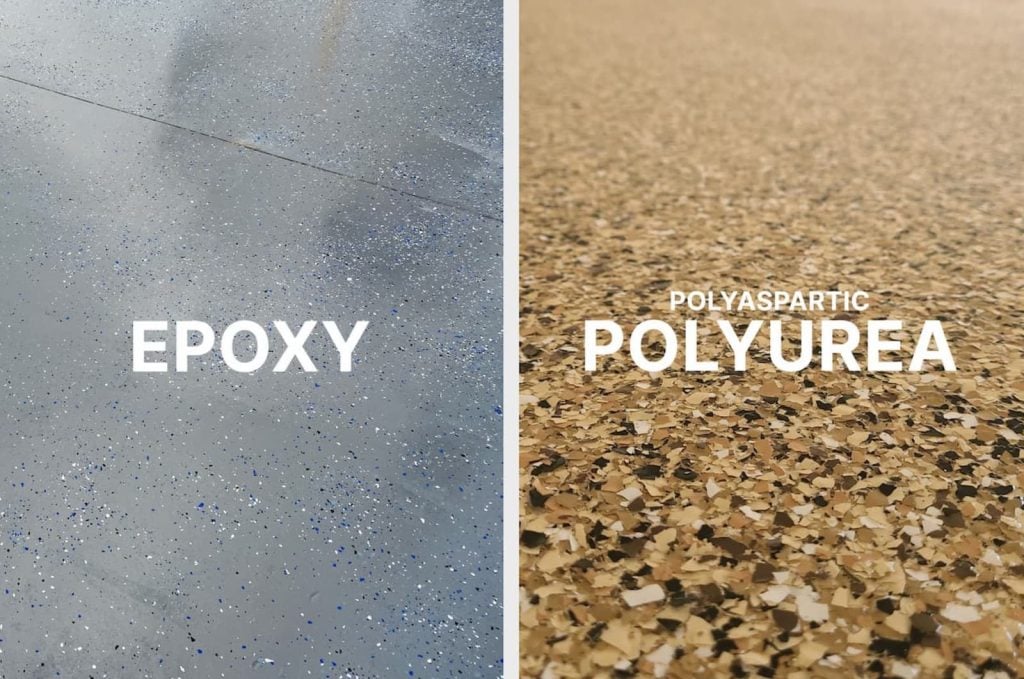
When homeowners start comparing garage and concrete floor coatings, one question comes up again and again.
Which one is better: epoxy, polyaspartic, or polyurea?
It is a fair question, but it does not always have a one-word answer.
Each coating type has strengths. Each one performs differently. And each one can be the right or wrong fit, depending on the space, the condition of the concrete, the installation process, and the floor’s performance goals.
That is why the debate around Epoxy vs Polyaspartic vs Polyurea is so important.
Many people assume there must be one clear winner in every situation. In reality, the best coating is usually the one that matches the floor, the environment, and the way the space is used. Hi-Tech Painting & Decorating’s floor coating approach reflects that way of thinking. The focus is not just on one product. The focus is on preparation, layering, and long-term performance.
That tells homeowners something important right away.
This is not always a fight where one product replaces all others. In many real projects, the strongest result may come from using the right combination of materials in the right order.
So, in the debate over Epoxy vs Polyaspartic vs Polyurea, which floor coating wins?
Let’s break it down in practical terms.
Why this comparison matters
Concrete floors face more stress than many people realize.
In a garage, workshop, basement, or utility area, the floor may be exposed to vehicle traffic, moisture, hot tires, dirt, road salt, chemical exposure, dropped tools, and day-to-day abrasion. A coating is not just there to make the floor look better. It is there to help protect the concrete and create a surface that is easier to maintain.
That is why choosing the right system matters.
If you choose a product based only on price or marketing language, you may end up with a floor that does not suit the space. If you choose based on the slab condition, exposure level, and installation method, you have a much better chance of getting lasting value.
Understanding the basics first
Before comparing Epoxy, Polyaspartic, and Polyurea, it helps to understand a simple truth.
These coatings are not all trying to do the same job in the same way.
Some are valued for adhesion.
Some are valued for fast return to service.
Some are valued for UV stability.
Some are chosen because they work well within a layered system rather than as standalone answers.
That is why a direct comparison can get confusing. A homeowner may hear that polyurea is stronger, that polyaspartic cures faster, or that epoxy is more affordable. All of those points may be true in certain situations, but none of them tells the full story on its own.
The real question is not just which product sounds best.
The real question is which system is best for the floor you have.
What is epoxy floor coating?
Epoxy is one of the most widely known concrete floor coating materials.
When people talk about coated garage floors, epoxy is often the first word they use. It has been a familiar option for years and is still commonly associated with concrete floor upgrades.
In general terms, epoxy is valued for creating a hard, durable surface over properly prepared concrete. It is commonly used in multi-layer systems and can serve as a strong base for garage floor applications.
Epoxy is often a good option when:
- the floor needs a durable coating base
- budget matters
- the installation can allow for proper curing time
- the goal is a solid, protective system over prepared concrete
Epoxy has remained popular for a reason.
It can perform well when the surface is prepared correctly, and the system is designed for the space.
What is polyaspartic floor coating?
Polyaspartic is often discussed as a premium garage floor coating option.
One reason it gets so much attention is that it is often associated with fast curing and strong topcoat performance.
Homeowners often want:
- a floor that looks clear and sharp
- better resistance to yellowing or sunlight-related change
- strong wear performance
- faster return to service than some traditional systems allow
Polyaspartic often comes up because it checks many of those boxes when used correctly.
It is not just about appearance. It is also about performance at the top surface, where the floor is in daily contact, undergoes cleaning, and is exposed.
What is polyurea floor coating?
Polyurea is another high-performance floor coating material that often comes up in garage floor discussions.
It is less about a simple paint-like application and more about a professional coating system that depends on preparation, layering, and a well-planned installation process.
Polyurea is often associated with:
- fast-curing systems
- strong adhesion potential
- durable garage floor use
- professional installation environments
For homeowners comparing Epoxy vs Polyaspartic vs Polyurea, polyurea is often the option that sounds the most advanced. But advanced does not always mean the automatic best choice. The slab, the installer, the system design, and the project goals still matter.
Epoxy vs Polyaspartic vs Polyurea: the biggest differences
Now, let’s get into the comparison itself.
1. Cure time
One of the biggest differences people notice is cure speed.
Epoxy is often seen as the slower option. That does not make it inferior. It just means the project timeline may be different.
Polyaspartic and polyurea are both commonly associated with faster return-to-service systems.
For homeowners, this matters because:
- a faster system may reduce disruption
- a slower system may still be perfectly acceptable if schedule pressure is low
- fast cure only helps when the installer is prepared to work correctly with the material
So when comparing Epoxy vs Polyaspartic vs Polyurea, faster isn’t always better on its own. It is only better when it fits the project.
2. UV stability
This is a major point in the comparison.
In practical terms, if UV stability is a priority, polyaspartic often stands out. That does not mean epoxy has no role. It means the topcoat choice can be especially important when appearance over time matters.
3. Role in the system
This is where many comparisons go wrong.
People often talk as if epoxy, polyaspartic, and polyurea are always competing as direct substitutes. In actual installations, they may serve different roles in the same floor system.
That means the real winner in Epoxy vs Polyaspartic vs Polyurea may not be a single product.
It may be the right combination.
4. Installation demands
All three coating types depend heavily on correct installation.
That should tell homeowners something important.
A poor installation can ruin even a strong product choice.
Surface contamination, moisture issues, weak concrete, poor prep, rushed application, or an unsuitable system design can lead to disappointing results, no matter which label sounds best in a sales pitch.
5. Project goals
Different spaces call for different answers.
A homeowner who wants a decorative garage floor with strong UV resistance may lean toward a system that includes a polyaspartic topcoat.
A property owner focused on a proven base layer and solid build may value epoxy within the system.
A project with tight turnaround demands may bring polyurea or polyaspartic more strongly into the conversation.
The right answer depends on what matters most.
When epoxy makes the most sense
In the Epoxy vs Polyaspartic vs Polyurea debate, epoxy still earns its place.
It often makes sense when:
- the project can allow for a more traditional cure schedule
- the floor needs a reliable build layer or base
- the slab is being professionally prepared
- value matters along with durability
- the full system is being designed, not just the top surface
Epoxy remains a practical option because it is familiar, proven, and often useful as part of a full coating build.
So, epoxy does not lose this comparison just because newer materials exist.
It stays relevant because it still performs an important role.
When polyaspartic makes the most sense
Polyaspartic stands out most when top-surface performance and appearance are major priorities.
It often makes sense when:
- UV stability matters
- chemical resistance matters
- the finish needs to be hard-wearing
- the garage needs a clear protective topcoat
- faster return to service is part of the goal
That makes polyaspartic especially appealing for homeowners who want a floor that not only performs well but also holds its appearance better in light-exposed spaces.
When polyurea makes the most sense
Polyurea often makes sense when homeowners want a high-performance professional floor coating system, and the contractor is experienced with that process.
It may be a strong fit when:
- the project calls for a fast-curing system
- professional installation is expected
- durability is a top concern
- the floor will see demanding garage use
That tells homeowners to evaluate polyurea as part of a system, not just as a buzzword.
Which coating lasts the longest?
This is one of the most common questions, but it does not have a universal answer.
Longevity depends on:
- concrete condition
- moisture issues
- preparation quality
- installer skill
- traffic level
- chemical exposure
- system design
- ongoing maintenance
That is the right way to think about lifespan.
A well-built system on a well-prepared floor often outperforms a poorly installed premium coating.
So if you are comparing Epoxy vs Polyaspartic vs Polyurea only on lifespan, you may be asking a too-narrow question.
A better question is:
Which system is most likely to last well in my space?
Which one is best for a garage floor?
For many garage floors, the best answer is not epoxy alone, polyaspartic alone, or polyurea alone.
It is the right multi-layer system.
That system-based mindset matters because garages face mixed demands:
- tire traffic
- moisture
- abrasion
- visual expectations
- maintenance needs
- traction concerns
A single-word product answer may sound neat, but it does not always reflect how strong floor coating systems are actually built.
What homeowners should ask before choosing
Before deciding between Epoxy vs Polyaspartic vs Polyurea, ask these questions:
What condition is the concrete in?
How will the space be used every day?
Is UV exposure a concern?
How quickly does the floor need to return to service?
What prep will be done before coating?
What role does each layer play in the system?
Is the recommendation based on my floor, or just on what the company sells most often?
These questions help move the conversation away from hype and toward a real solution.
So, which floor coating wins?
The most honest answer is this:
There is no automatic winner in every situation.
Epoxy wins when a strong, proven base or build layer makes the most sense.
Polyaspartic wins when UV stability, chemical resistance, and hard-wearing topcoat performance are top priorities.
Polyurea wins when a fast, professional, high-performance system is the right fit.
And in many cases, the real winner is a layered system that combines their strengths.
The debate over Epoxy vs Polyaspartic vs Polyurea is useful because it pushes homeowners to ask better questions.
But the smartest decision is usually not about chasing the most impressive product name.
It is about understanding the floor, the exposure, the installation method, and the purpose of each layer in the system.
A coating should do more than look good on day one.
It should be built to perform.
That is why preparation matters so much.
That is why product selection matters.
And that is why the best contractor is the one who explains not just what they use, but why they use it.
When that happens, the winning floor coating is not just the material with the best marketing.
It is the system that gives your concrete floor the right balance of adhesion, durability, appearance, and long-term value.
FAQs
1. What is the main difference in Epoxy vs Polyaspartic vs Polyurea?
The biggest difference is that they are often used for different strengths within a floor system. Epoxy is commonly used as a dependable base or build layer, polyaspartic is often chosen for UV-stable and durable topcoat performance, and polyurea is often associated with fast-curing professional systems.
2. Which is better for garage floors: epoxy, polyaspartic, or polyurea?
For many garages, the best answer is often a system rather than a single material. The strongest result can come from combining the right materials in the right layers, based on the floor’s condition and how the space will be used.
3. Does polyaspartic resist UV better?
In many cases, polyaspartic is chosen when UV stability is a priority. That makes it appealing for garages with sunlight exposure or for homeowners who want better long-term appearance.
4. Is polyurea always better than epoxy?
Not automatically. Polyurea may be a strong choice for fast-curing, high-performance systems, but epoxy still plays an important role in many floor coating builds. The better option depends on the floor condition, project goals, and installation plan.
5. What matters more than the product name?
Preparation and system design matter most. Surface condition, adhesion, layering, and proper installation have a huge impact on how well the floor performs over time.

Ron Gerharz is the owner of Hi-Tech Painting & Decorating, a locally owned, employee-based company that has been serving customers since 1989. Based in Sheboygan, Wisconsin, Ron leads a team known for quality workmanship, professionalism, and a full range of residential and commercial painting and decorating services. Through his leadership, Hi-Tech Painting & Decorating helps homeowners and businesses enhance their spaces with expert craftsmanship and dependable service.