Running a restaurant kitchen in Sheboygan? Here’s what you’ll learn: which floor coatings meet health-code and safety demands, and how to pick a system that won’t crack, stain, or get slippery under pressure.
A commercial kitchen floor coating is a seamless, slip-resistant, food-safe surface—usually epoxy or urethane cement—that withstands grease, hot water, dropped pans, and constant foot traffic. The right system seals out bacteria, drains cleanly, and meets health-code expectations, while a wrong or DIY floor cracks and harbors grime. Choosing the correct coating protects both your staff and your inspection score.
What makes a kitchen floor coating different?
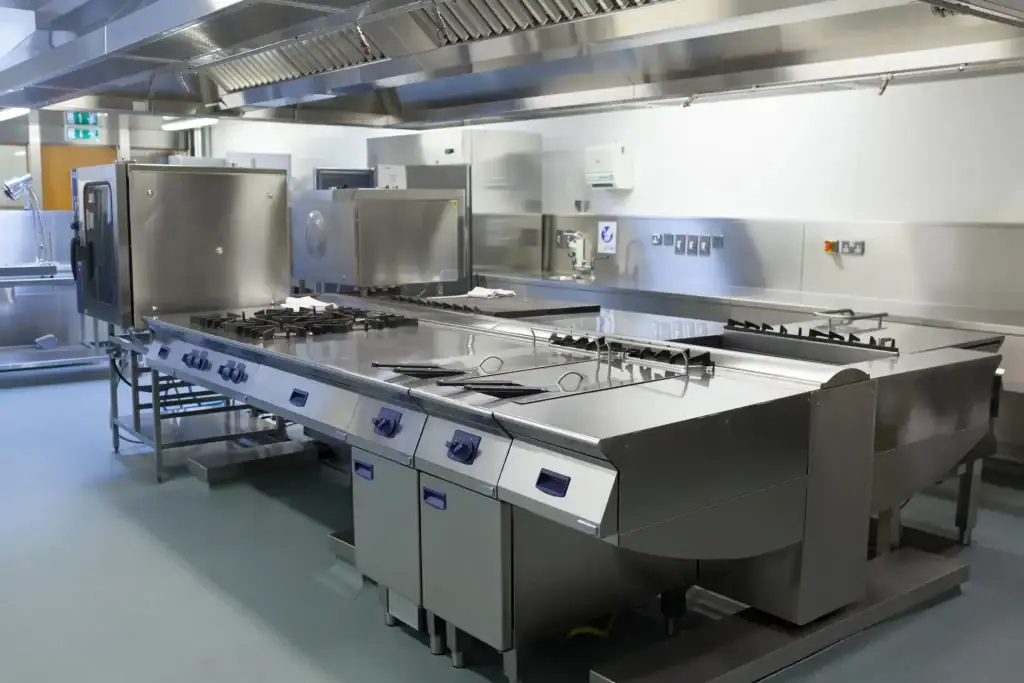
A commercial kitchen is one of the harshest floor environments there is. The coating has to handle boiling water and steam, animal fats and oils, acidic foods, sharp impacts, and heavy rolling carts—often all in one shift. On top of that, it has to stay slip-resistant when wet and seamless enough to clean and sanitize.
That rules out tile and standard paint. Grout lines trap grease and bacteria, and ordinary coatings soften under hot grease and peel. A purpose-built commercial kitchen and restaurant floor coating is poured as a single monolithic surface with integral cove bases, so there are no seams for contamination to hide.
Which floor coatings work best in commercial kitchens?
Two systems dominate food-service flooring, and the choice depends on heat and wash-down intensity.
| System | Best for | Key strengths |
|---|---|---|
| Urethane cement (urethane mortar) | Hot kitchens, dishwashing, wash-down | Survives thermal shock from boiling water and steam; extremely durable |
| Epoxy with slip-resistant topcoat | Prep areas, dining-side service, bakeries | Seamless, sanitary, customizable texture and color |
Urethane cement is the workhorse for cook lines and dish pits because it can take near-boiling water hitting a hot floor without cracking. Epoxy systems shine in prep zones and front-of-house areas where thermal shock is less of a concern but cleanliness and looks still matter.
How do these coatings keep a kitchen safe and sanitary?
Two priorities drive every kitchen floor: slip resistance and sanitation.
- Slip resistance. Aggregate is broadcast into the topcoat to create traction that holds even with grease and water underfoot. OSHA’s walking-working surfaces standards make slip-and-fall prevention a real liability issue, and a textured coating is one of the simplest ways to address it.
- Sanitation. A seamless, non-porous surface with coved edges means no cracks or grout to trap food and bacteria. Floors rinse and drain cleanly, which supports health-code compliance and faster closing routines.
- Chemical resistance. Food acids, sanitizers, and degreasers won’t etch or discolor a properly specified coating.
How long will my kitchen be closed for installation?
Downtime is the question every owner asks first. Fast-curing systems—especially polyaspartic topcoats and certain urethane formulations—can return a floor to service quickly, sometimes over a weekend or a planned closure. The exact timeline depends on slab condition, square footage, and the system chosen.
We plan installs around your hours to minimize lost revenue; our breakdown of commercial floor coating downtime walks through what to expect day by day.
Which is right for your Sheboygan kitchen?
If you run a high-heat cook line, a busy dish room, or a wash-down operation, urethane cement is usually the safest long-term choice. If you’re coating a bakery, prep area, café, or front-of-house service zone, a slip-resistant epoxy system delivers a clean, attractive, sanitary floor at a lower cost. Many Sheboygan restaurants use both—urethane cement in the back and epoxy up front.
The smartest move is an on-site assessment, where an installer checks your slab, drains, and traffic patterns and specs a system to match how your kitchen actually runs.
Get a free commercial floor coating estimate in Sheboygan, WI
Protect your kitchen and your inspection score. Hi-Tech Painting & Floor Coatings proudly serves Sheboygan and the greater Lakeshore Wisconsin area—including all of Sheboygan County plus Sheboygan Falls, Kohler, Plymouth, Elkhart Lake, Fond du Lac, and Ozaukee County. We install food-safe, slip-resistant floors built for commercial kitchens. Call (920) 457-7695, request a free estimate, or contact us to schedule a walkthrough. Confirm we cover your location on our service areas page.
Frequently Asked Questions
What is the best floor coating for a commercial kitchen?
Urethane cement (urethane mortar) is the top choice for cook lines, dish rooms, and wash-down areas because it resists thermal shock from boiling water and steam. Slip-resistant epoxy works well in prep zones, bakeries, and front-of-house areas where sanitation and appearance matter most.
Are kitchen floor coatings slip-resistant when wet?
Yes. A textured aggregate is broadcast into the topcoat to maintain traction even with grease and water on the surface. This is a key safety feature that helps reduce slip-and-fall risk for staff and supports OSHA walking-working-surface expectations.
Do commercial kitchen floor coatings meet health codes?
A properly installed seamless coating with coved bases has no grout lines or cracks to trap food and bacteria, and it cleans and sanitizes easily—all of which support health-code compliance. Final inspection still depends on your local health authority, but the right floor makes compliance far easier.
How long does a restaurant have to close for a new floor?
It depends on square footage, slab condition, and the system, but fast-curing options can return a floor to service over a weekend or a planned closure. We schedule installs around your hours and provide a day-by-day timeline so you can plan around minimal downtime.
How long does a commercial kitchen floor coating last?
With proper installation and routine cleaning, a quality urethane cement or epoxy kitchen floor can last 10 to 20 years or more. Lifespan depends on traffic, wash-down intensity, and how well the floor is maintained day to day.

Ron Gerharz is the owner of Hi-Tech Painting & Decorating, a locally owned, employee-based company that has been serving customers since 1989. Based in Sheboygan, Wisconsin, Ron leads a team known for quality workmanship, professionalism, and a full range of residential and commercial painting and decorating services. Through his leadership, Hi-Tech Painting & Decorating helps homeowners and businesses enhance their spaces with expert craftsmanship and dependable service.